
'Das is friendly, but he finally does what he does. The quality of engagement is very good.'
IBA has commissioned a study to evaluate the pros and cons of keeping banks shut on Saturdays.

Between April and August, it issued request seeking LoC against 147 individuals to prevent them from leaving the country, the bank said in response to a Right to Information query filed by Pune-based activist Vihar Durve.
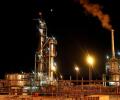
India's import of discounted crude oil from the Russian Federation hit an all-time high in May, with state-run refiner IOC becoming the biggest importer of Russian oil, relegating Reliance Industries to the second place, trade and shipping data show. Indian imports of Russian oil, accounting for over 46 per cent of its total crude oil imports in May, have grown after strong backing by New Delhi, with state-run refiners powering imports of discounted crude. Discounts on Russian oil average around $10 a barrel, said an official from a state-run refiner. IOC's May purchases rose by 64 per cent on the month, and accounted for half of its total crude imports last month, ship tracking data show.

The slowdown in corporate revenue growth over the last one year has begun to reflect in India Inc's capital expenditure, or capex. The country's top listed companies are going slow on fresh investment in capacity expansion, in line with a deceleration in their top line growth. The combined fixed assets of the listed companies, excluding banking, finance services and insurance (BFSI) and the government-owned oil & gas firms, were up 10.1 per cent year-on-year (Y-o-Y) during April-September 2023 (H1FY24) - the slowest in 18 months - as against 21.1 per cent Y-o-Y growth in H2FY23 (October 2022-March 2023) and 11.6 per cent growth in the April-September 2022 period (H1FY23).

'We are working with a few housing finance companies to drive affordable lending because that's where we believe our sweet spot is.'

On November 12, 2021, the Reserve Bank of India (RBI) decided to ring in uniformity in asset classification and income recognition across all lending institutions. Shadow banks, or non-banking financial companies (NBFCs), like commercial banks, are to test non-performing assets (NPAs) on a daily basis and upgrade them to "standard assets" only when interest and principal arrears are settled by borrowers. This is going to create all manner of headaches for shadow banks and their clientele. Says Y S Chakravarti, managing director and chief executive officer (CEO), Shriram City Union Finance: "NPA levels will go up, especially of small borrowers.

Banks and companies in India are taking a cautious approach towards Sri Lanka, which, reeling from a financial crisis, has sought a $1-billion loan from the country to import essential commodities. A senior State Bank of India (SBI) executive said the bank was committed (to Sri Lanka) for the long term. "As far as exposures (are concerned), the bank will be cautious on its dollar exposure to Sri Lankan entities till the situation improves," he said.

Rajan sees banks passing on the benefit of lower rates regime to customers.

State-run lenders will take a lead in creation of the bad bank, but the sick asset resolution platform needs the support of private banks and other lenders to be successful, State Bank of India managing director Swaminathan J said on Thursday. If all lenders come on board, the National Asset Reconstruction Company (NARC) announced in the budget will be able to aggregate 100 per cent of a sick company's outstanding loans, which shall ultimately lead to better resolution of the asset quality stress for all. The government is yet to announce the specific contours of the NARC or the bad bank and has also only said that it is willing to provide some sovereign guarantee to help the platform.

Senior bankers are trying to impress upon the central bank that the shift to external benchmark-linked lending be postponed to April 1, 2020.

Sources say given the complexity involved in the process of creating a holding company, which will ultimately be the parent company of banking and other businesses, banks are going slow in acquiring stakes in insurance arms or mutual funds of other lenders.

India's $121 billion troubled debt pile, over $100 billion of which is on the books of state-owned banks, has come under close scrutiny from prosecutors, the media and politicians

Business is down to such an extent that last year these firms could not even meet RBI's capital norm of Rs 50 million for partnerships and Rs 100 million for public and private firms in this line of business.

Rural markets can provide 25 per cent growth over the next decade, says CLSA's Aashish Agarwal.
Rural markets can provide 25 per cent growth over the next decade, says CLSA's Aashish Agarwal.

Mallya, once known as the "King of Good Times" for his flamboyant lifestyle, has until Friday to appear before an IDBI committee to explain why he should not be declared a "wilful defaulter".
The Finance Ministry has invited private sector bankers.

Chandrababu Naidu's victory comes barely eight months after his political career seemingly crashed in September 2023 when the YSRCP government arrested him in an alleged corruption case.

The board is likely to take up the matter this month.

'After a long time, we have a governor who is approachable. The RBI's interactions with us are now much better.'

ICICI Bank has the largest proportion of SDR loans as a percentage of its total, followed by state-run United Bank of India and Canara Bank.

Temperatures in 17 locations breached 48 degrees Celsius on Monday, with the relentless heat affecting health and livelihoods across large parts of northwestern and central India.

These PSU banks also account for the lion's share of bad loans or NPAs plaguing the sector and need crores of rupees in new capital in the next two years to meet global Basel III capital norms.

Govt renews search for five PSU bank chiefs; norms relaxed.

According to a 2021 Redseer report, India's overseas education market is estimated to more than double to $80 billion by 2024.
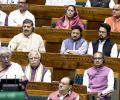
Finance Minister Nirmala Sitharaman on Tuesday announced income tax relief for the middle class, a Rs 2 lakh crore outlay for job creation schemes over the next five years and a spending splurge for states run by her party's new coalition partners as she unveiled the Modi 3.0 government's first budget after the general elections.

The ongoing Hamas-Israel conflict has disrupted India's efforts to gain from a recent fall in crude oil prices. Since Hamas' invasion of southern Israel on October 7, petroleum has become costlier by around $5 per barrel, threatening to stoke prices and impact growth. Brent crude was trading at $89.8 per barrel on October 9 (9.15 pm IST), up over 4 per cent, thwarting India's anticipation of a period of declining oil prices - after the leading global petroleum benchmark declined by around 11 per cent last week.

Though Indian banks don't have large exposure to subprime mortgages, analysts are worried at the rise in their restructured loan portfolios and deterioration in credit quality.
India's largest private sector lender ICICI Bank has hit the Chinese debt market for a benchmark issue of about $500 million.

Disgruntled executives are already pinning hopes on the new banks, too.

Habib Bank along with state-run National Bank of Pakistan had applied to RBI, India's banking regulator, for starting operations in India, while SBI, PNB and Bank of India had sought appoval for going to Pakistan.
Unlike in the past, when old private banks compromised upon underwriting standards to take on the bulk, they've now realised that scaling up at the cost of quality isn't worth the while. These banks have also readjusted growth targets when required, and rebalanced books to preserve capital and asset quality.
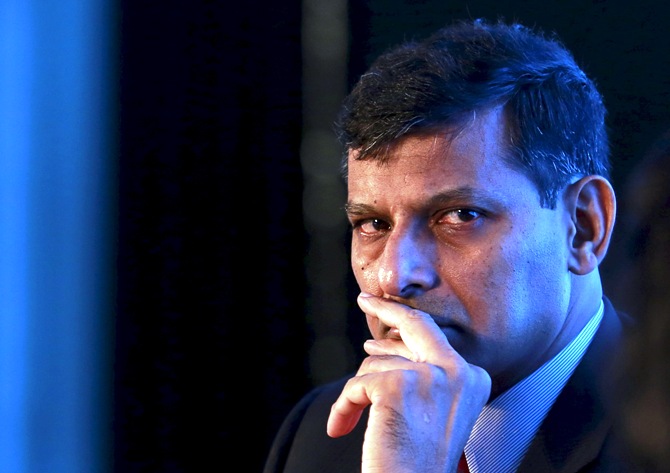
The NPA of the public sector banks rose to 6.03% as of June 2015.

The maximum number of banks are from the US (74), followed by China (29) and South Korea (26).

Only three of India's 45 commercial banks have cut base lending rates since the Reserve Bank of India's surprise easing this month, hurting the government's drive to lift business investment.
The probe into selections for banks such as Bank of Baroda and Canara Bank followed the arrest of Syndicate Bank CMD S K Jain for alleged graft.

Banks are set to sell dud-loans worth Rs 90,000 crore of 22 firms in the first tranche to the National Asset Reconstruction Company (NARCL). It's reason for cheer given that such sales to asset reconstruction companies (ARCs) have been poor in recent times. In fiscal 2020, their assets under management (AUM) contracted by 4 per cent; and in fiscal 2021, it fell by another 100 basis points to Rs 1.07 trillion. So, why are we where we are?

Rajan said RBI should pay as much dividend as possible to the government, which over the past two years has run into billions of dollars
For the baning sector, 2018 was a 'Year of Exits' - borrowers fled from the country as loans went kaput and many bank CEOs were forced to leave
